The Keepsake Box Is Not a Memory Test
A keepsake box can hold meaning without holding everything. Choose objects that tell a clear story, and let photographs or words preserve the rest.
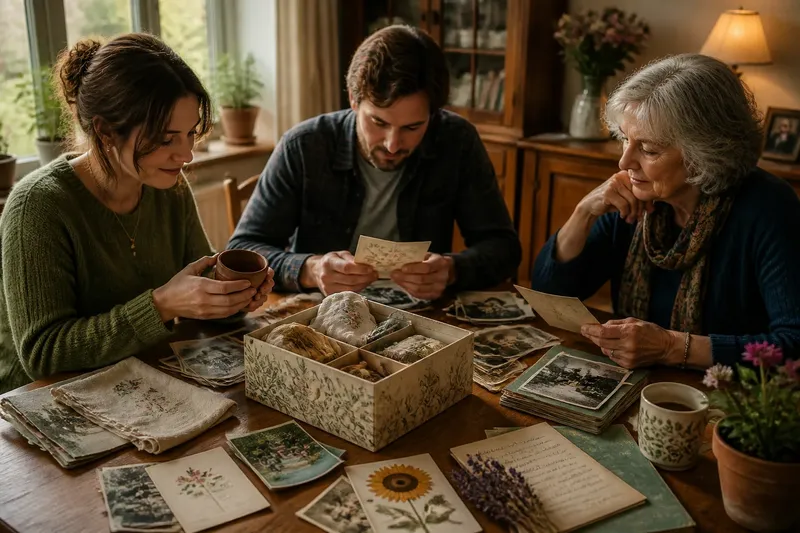
At the kitchen table, a family sorts a tin of ticket stubs, birthday cards and small objects left by someone they love. The keepsake box seems to ask a painful question: if they let anything go, are they letting go of the person too? A keepsake box is not a memory test, and its value does not depend on how much it can hold.
Imagine that Mara, her brother Ben and their aunt Jo are sorting their late grandmother’s belongings. This is an invented situation, not a report of a real family. Their grandmother loved gardening and sent handwritten notes to relatives. The family has one small box they want to keep together, but the dining table is crowded with objects that each seem to carry a claim. Their task is not to rank their love. It is to choose a few things that help them recall the person in ways they want to keep.
Begin with the purpose
Before picking up the first object, the family agrees on what the box is for. They want something they can open on a difficult day, share with younger relatives, and store without turning it into a permanent sorting project. That purpose gives them a useful question: “Will this help us remember a particular part of her life, or help us tell someone else about it?”
A purpose is not a rule that every family must adopt. Someone may want a box for touchable objects; another person may prefer a photo folder and a short written account. The point is to decide what the keepsakes are meant to do before the objects start making the decision for you.
Mara suggests putting aside items that carry a vivid, specific association. Ben asks whether a thing represents a person’s habit, a shared event or a relationship. Jo adds that an object can matter because it came from someone, even if its connection is not obvious to everyone. Their criteria leave room for different memories without requiring them to keep every duplicate or scrap.
Give memories different forms
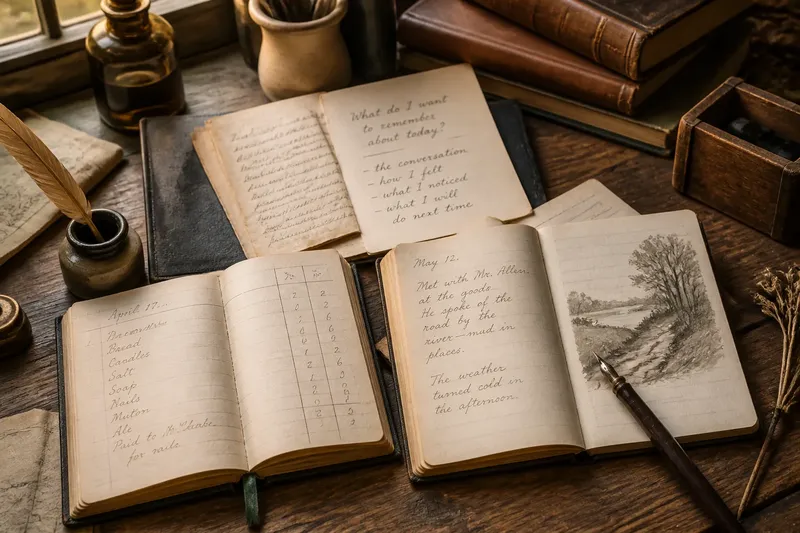
As they sort, the family sees that an object is only one way to preserve a memory. A recipe can be copied into a family file. A faded card can be photographed. A story about a particular afternoon can be written down in a few lines. Keeping the memory does not have to mean keeping every physical trace.
This distinction helps with items that are meaningful but awkward to store. A large garden ornament may recall years of visits, while a small packet of seed labels may show the names of flowers their grandmother liked. The ornament does not become less significant because it is too bulky for the box. The family can take a photograph of it and write down where it stood, who tended it and what they remember doing there.
They treat digital copies as useful records, not as substitutes that make the original worthless. For a photograph, they note what is pictured and who is in it, then place the file in a shared folder with a clear name. A folder called “Grandma’s garden” is easier for relatives to recognise than a loose collection of files with names that mean little outside the moment they were saved.
Choose by the story
Each family member picks up an object and explains the connection. The aim is not to persuade everyone that an item is important. It is to find out what the item means, then decide whether its meaning belongs in the shared box, in a private collection, in a photograph or in a written memory.
Say Ben finds a small, chipped terracotta pot. It reminds him of planting seedlings with his grandmother on the back step. He explains the scene: she would set out newspaper for the mess, and he was allowed to choose which seedlings went into the garden. The family decides to keep the pot because it is compact and prompts a story they can pass on. They take a picture of the back step as they remember it and write down Ben’s account beside the photo. That is a choice about what the family wants to retain, not proof that other objects mattered less.
Some objects will have several stories; others will matter mainly to one person. A shared box does not need to absorb every private attachment. Mara chooses a brooch for herself, while the family photographs it and records why it mattered to her grandmother. Keeping the brooch personally lets Mara honour that connection without making the shared box carry a story she is best placed to tell.
It can help to use a simple test for each candidate:
- Can someone name the memory? If not, add a note or photograph before deciding.
- Does it show a distinctive habit, relationship or occasion? If several things say the same thing, choose the one that prompts the clearest story.
- Does it belong in a shared collection? If its meaning is personal, let the person closest to it decide whether to keep it privately.
- Could another form preserve the useful part? A photograph, copied recipe or written recollection may keep the story without the bulky item.
- Will the family know what it is later? If the connection depends on someone’s memory, write down the name, place or occasion now.
The questions are prompts, not a scoring system. A keepsake can be worth keeping even if it does not answer every question. The family is looking for a set of objects that can be understood and cared for, not a perfect archive of a person’s life.
Where should you start sorting?
Should every relative have a say?
Invite people who share the history or will care for the collection, and make space for personal keepsakes to remain personal. If several relatives disagree, pause over the particular object rather than treating the disagreement as a verdict on anyone’s affection.
What if an item has no label?
Ask relatives who might recognise it, then write down any reliable identification and who supplied it. If its story remains unknown, decide whether the object itself is enough reason to keep it, instead of inventing an explanation.
How can you preserve a memory without the object?
Photograph the item and record the details that a picture cannot show, such as who used it or what happened around it. A short note in ordinary language can be more useful to a future reader than a photograph with no context.
What if the sorting feels too hard?
Set the objects aside and return when the family has more energy or support. Grief can make ordinary decisions feel loaded, and there is no need to settle every choice in one sitting; a counsellor or grief support professional may help if the process is causing serious distress.
Finish with a usable collection
By the end of their imagined afternoon, Mara, Ben and Jo have chosen a few objects for the box, set aside personal keepsakes, and made photographs and notes for memories they do not need to store in physical form. They label the box with a description of its contents and keep the written stories alongside it. Their result is not a complete record of their grandmother. It is a small collection that can prompt conversation.
They also leave a short note explaining why each shared object was chosen. That note makes the box easier for someone else to open years later without knowing the sorting conversation. It can be as plain as “The pot Ben used for seedlings with Gran” or “Her handwritten apple cake recipe.” The wording does not need to make the memory grand; it needs to make the connection legible.
When you make your own keepsake box, treat its capacity as a boundary that helps you choose, not as a measure of devotion. A box is like a bookshelf: it can hold selected things that invite you back to a story, but it cannot contain the whole life behind them. Choose the objects with a clear connection, preserve the stories in whatever form suits them, and let the people remembered remain larger than the collection.