A Rainy Afternoon with One Shared Game
Plan a rainy afternoon with one shared game, a welcoming explanation and flexible pauses so newcomers can join without turning the gathering into a production.
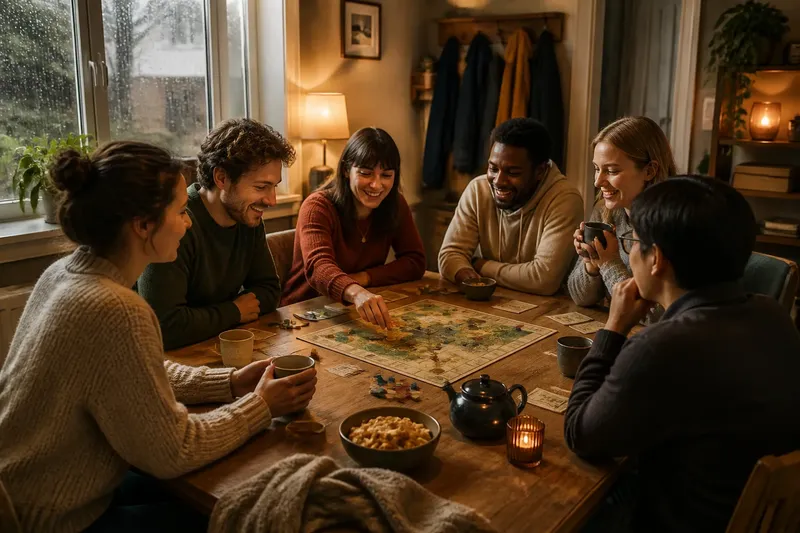
Rain ticks against the kitchen window while coats gather by the door. For a rainy afternoon with one shared game, keep the plan simple: choose something people can learn by watching, make a comfortable place to play, and leave room for the afternoon to change shape.
The aim is not to keep everyone occupied every minute. One game gives guests a common activity, while an unhurried pace makes it easy to join, take a break or simply enjoy the company. Think of the game as a serving board: it gives the gathering a useful centre, but nobody has to stay beside it all afternoon.
Choose a welcoming game
Pick a game with a short explanation, turns people can follow and little pressure to remember a long sequence of rules. Cooperative games can suit mixed groups because players work towards a shared outcome. A familiar word game, a simple card game or a light party game can also work if newcomers can learn by observing a round.
Before inviting people, check the box or instructions for the number of players, any age guidance and what the game needs. Consider the people coming: a game based on quick reading may be tiring for someone who would rather listen, while a game with a long wait between turns can leave quieter guests on the sidelines. If you are unsure, choose the option with the clearest turns and the least specialised knowledge.
Keep one alternative nearby, but do not set out a pile of choices that makes guests feel they must select the perfect activity. A second, quieter option could be a small jigsaw or a deck of cards for anyone who wants company without joining the main game.
Set up the room
Choose a table or clear patch of floor where everyone can see the pieces and hear the explanation. Move mugs, loose papers and anything likely to be knocked over. Put chairs where people can sit comfortably, and leave an open spot for someone who arrives after the game has begun.
Place the game within reach rather than laying out every component straight away. Set out water, tea or a simple snack on a separate surface so people can help themselves without reaching across the playing area. Keep the route to the door and kitchen clear; guests should not have to interrupt a turn to get past a bag or chair.
Soft light and a warm room help on a grey day, but avoid making the space feel staged. A lamp, a spare blanket and a place to hang wet coats are practical touches. If the room is small, let the game occupy one end of the table and keep the other end free for drinks or a guest who prefers to sit nearby.
Invite without pressure
Tell guests what the afternoon will be like in plain terms: there will be one easy game, snacks, and no expectation to stay for the whole visit. Mention if the game involves reading, drawing, acting or any other feature someone might want to know about in advance. This gives people a chance to decide comfortably rather than discover a surprise at the table.
Say that watching first is welcome. A newcomer may want to see a turn before joining, and someone who is tired may prefer to chat. Avoid assigning teams or roles before you know who has arrived and what they feel like doing.
Imagine a guest arrives while a round is in progress and is unsure whether to sit down. Pause at a natural break, offer them a chair and give a brief account of the aim and what happens on a turn. Let them watch the next turn before deciding; the visible result is a clear invitation, not a demand to catch up instantly.
Explain the first round
When everyone is settled, give the shortest useful explanation: what the group is trying to do, what a player does on a turn and how a round ends. Show the relevant card, token or board space as you speak. Leave uncommon edge cases for later unless they affect the next move.
Then play a practice turn together. Narrate the choices without quizzing anyone on the rules, and invite questions as they arise. If the instructions are confusing, look at the rule sheet together rather than improvising a rule that could change how the game works.
Once play begins, keep the pace kind. Give people time to decide, and avoid correcting every small hesitation. If a player makes a mistake that does not affect anyone else, ask whether they would like to change it; a relaxed table values comfort over catching someone out.
Keep the afternoon flexible
Do not plan a fixed number of rounds or make the game the only acceptable activity. After a round, offer a natural pause: refill drinks, open the window briefly if the room feels stuffy, or ask whether people want another round. A clear stopping point makes it easier for guests to leave without interrupting play.
Watch for signs that the group needs a change of pace. People may drift into conversation, start looking away from the table or take longer to make decisions. Treat that as useful information, not a problem to fix. You can pause the game, let a few people keep playing, or move to a quieter activity without announcing that the gathering has failed.
If the game depends on teams, keep the arrangement easy to adjust when someone arrives late or steps out. For a game that allows observers, invite them to follow along without holding a place in the turn order. A flexible group is easier to welcome than one built around a strict schedule.
What guests may ask?
What game works for newcomers?
Choose one with a clear aim, visible turns and rules that can be demonstrated in a practice round. A cooperative format or a familiar card game may help, provided the people present can follow its pace and style.
How long should the gathering last?
Set a broad arrival window rather than a firm finish time, and let guests know they can leave when they need to. Use the end of a round as a natural moment to check whether the group wants to continue.
What if someone does not want to play?
Offer a comfortable seat nearby and make watching or chatting equally acceptable. Keep a quiet alternative within reach, such as a jigsaw or a book, without turning it into a separate programme.
What if the rules cause disagreement?
Pause and check the printed instructions for the point in question. If the answer is unclear, agree on a simple interpretation for the current round and make sure everyone knows it before play resumes.
End on an easy note
When people begin to leave, finish the current round if the group wants to, then gather the pieces together. Ask guests to check for their belongings and offer leftovers without making a production of tidying. You can leave a longer clean-up until after the room is empty.
A rainy afternoon with one shared game works best when the invitation stays open from start to finish. Choose a game guests can understand by seeing it, explain only what they need for the next turn, and let the gathering loosen into conversation whenever that feels more natural than another round.
Before the next rainy day, make a brief note of what suited this particular group: a game that allowed late arrivals, a chair placed away from the table, or a snack that was easy to share. Use that observation to make the next invitation more welcoming, rather than assuming the same plan will suit every set of guests.